top of page

Bringing Resilience into Every Home

1 day ago
3 min read

This year’s International Day for Disaster Risk Reduction (IDDRR) theme, Resilience Starts at Home, highlights that our homes and communities are critical places to prepare for disasters, and that choices that determine whether homes are safe involve every level of society. At GHI, our efforts focus on equipping and empowering people in at-risk, low-income communities before disasters strike with knowledge, skills, and actionable information to better protect themselves, their family, and their broader community.


Here are a few examples of how we contribute to strengthening resilience at home:

Since our inception, we have promoted safer, disaster-resilient construction to protect people’s lives. Our training and mentoring for engineers and masons, for example, will often focus on construction types typical of houses in their region. Our work has also focused on risk-informed planning, enabling safer development, including that of people's homes.
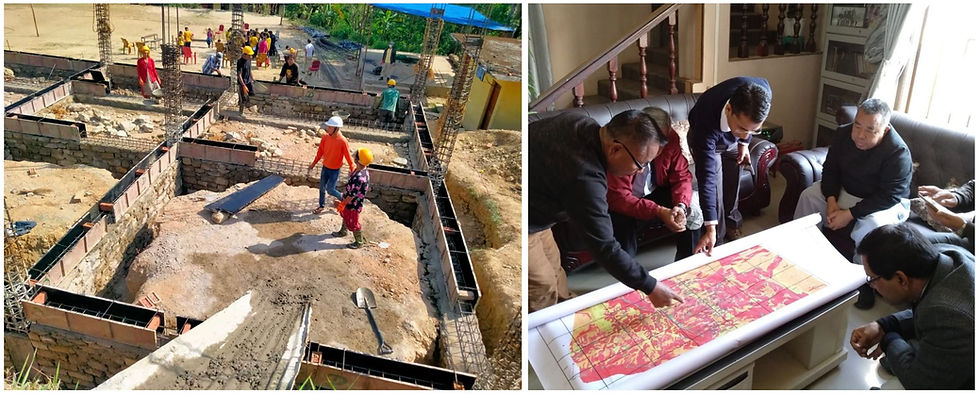

(Left) Trained local masons constructing an earthquake-resistant school in western Nepal; the construction type selected for this demonstration project is typical of schools and houses in the region, enabling broader application. (Right) New site development regulations consider landslide risk in Aizawl, India, enabling more resilient housing.

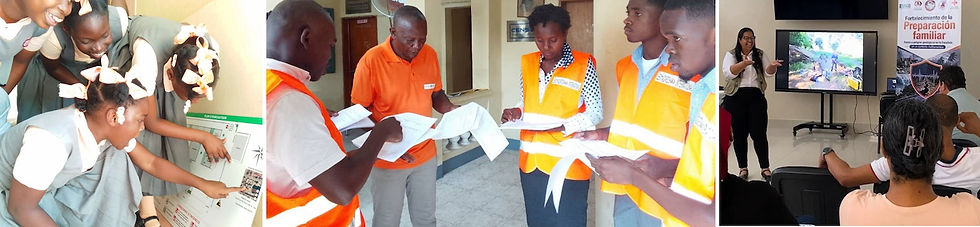
For the past 10 years, we have provided families with science-based, locally relevant, actionable disaster preparedness information in at-risk communities in Haiti and the Dominican Republic. We often go where people are, allowing for a welcoming space to answer their questions.


(Left) GHI Mitigation Officer in Haiti goes to churches to talk to families about preparing for earthquakes and other types of hazards. (Right) GHI Dominican Republic Representative leads sessions in homes and communities to share actionable preparedness messages directly with families while answering their questions.

Women are often the caretakers and managers of their households, making decisions for others in their family, and playing a key role in ensuring everyone’s safety. By engaging women in our programs, they can make more informed household decisions to better protect not only themselves, but their entire family. Integrating their perspectives in disaster risk planning is also critical, as they are often the ones helping children and elders evacuate during emergencies.
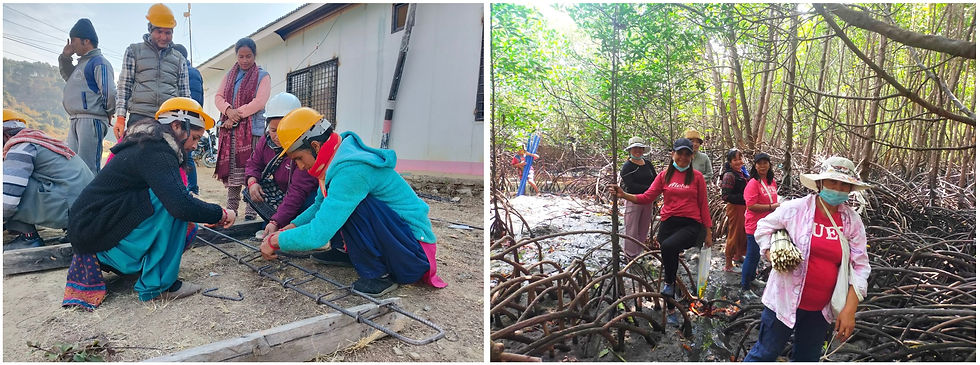

(Left) Woman (in white hat), who was previously trained under another GHI program, training other women masons in earthquake-resistant construction; engaging women in our technical trainings, where they are often left out, encourages other women to participate. (Right) Women have been a central presence and voice in our mangrove conservation work in the Philippines. They are strong advocates of this program, as they understand the importance of this valuable natural resource to protect their homes and families.

By equipping children and youth with actionable disaster knowledge, they can become influential messengers who bring life-saving information home to their families. Our youth programs encourage them to share what they learn in creative ways, such as through slam poetry, art, theater, short films, and essay competitions. Being active participants, what they learn now becomes deeply ingrained and is likely to stay with them into the future.
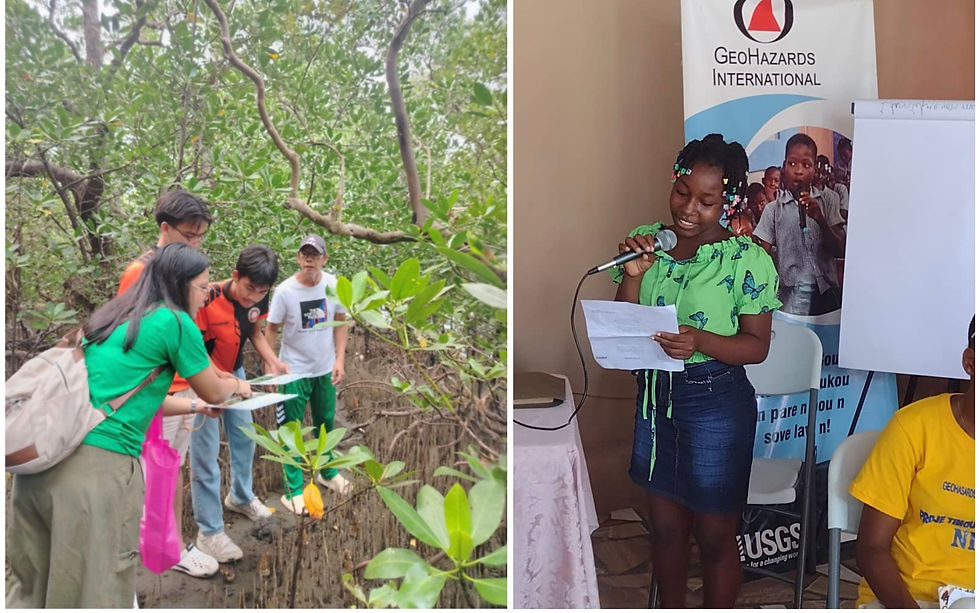

(Left) Youth in the Philippines have been enthusiastic contributors to our nature-based solutions work; the Mangrove Warriors youth group is helping to protect their mangrove forests and raise awareness of their protective role against coastal hazards. (Right) Student in Haiti sharing through poetry what she has learned about disaster readiness; Youth Resilience Club members, created under GHI projects, promote disaster resilience in their communities in northern and southern Haiti.

To truly create a resilient society, everyone in the community must be included. Disaster risk messaging and planning that considers the various needs and contexts of different groups is critical, especially for those that are most vulnerable. Our work emphasizes reaching everyone, including those that may be often overlooked.


(Left) Our work in Aizawl, India this year has included training schoolchildren with disabilities along with their caregivers. (Right) People with disabilities have been key participants in much of our work in Haiti.

We are proud to contribute to safer families and safer communities around the world, and to empower them to be agents of their own resilience.


Thank you for your support in making this possible.


Sincerely,


Veronica Cedillos

President & CEO


GeoHazards International 


bottom of page